501, Fifth Avenue, Suite 805 New York, NY 10017
 info@techwize.com
 +1 (949) 887-0154
 TechWize

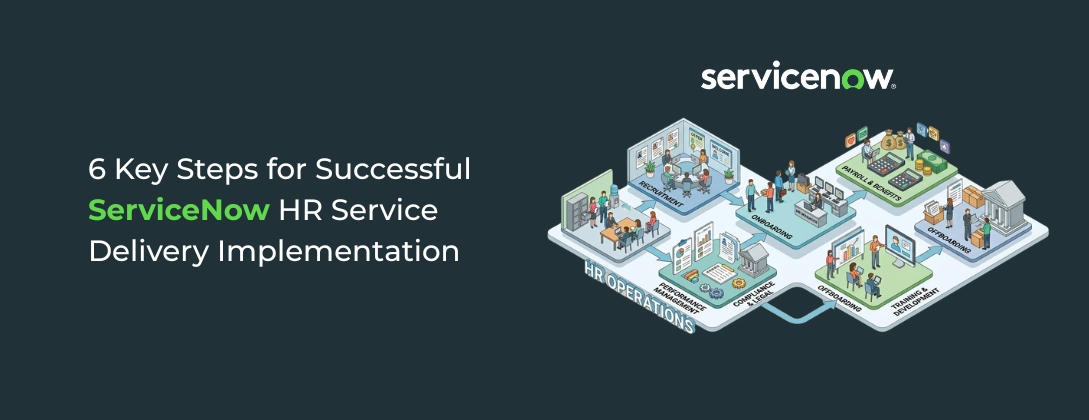
The landscape of modern human resources is undergoing a profound transformation. Gone are the days when HR departments functioned solely as administrative back offices, buried under mountains of paperwork and manual spreadsheets. Today, HR is a strategic partner that drives employee engagement, retention, and overall business success. However, achieving this level of strategic impact requires moving away from fragmented legacy systems. This is where a robust ServiceNow HR Service Delivery Implementation becomes a game-changer for organizations looking to modernize their operations.
ServiceNow HR Service Delivery, often referred to as HRSD, replaces the confusing maze of emails, phone calls, and isolated portals with a single, unified, intuitive platform. It allows employees to find answers quickly and request services seamlessly, much like they experience in their personal lives as consumers. But implementing such a powerful platform is not just about flipping a switch. It requires careful planning, strategic foresight, and a structured approach. A successful implementation can redefine how your employees interact with the organization, while a hasty one can lead to low adoption rates and wasted resources.
In this comprehensive guide, we will walk you through the six critical steps necessary for a successful implementation. We will also explore best practices, common pitfalls to avoid, and how leveraging professional ServiceNow HRSD Consulting Services can ensure your journey toward digital transformation is smooth and effective. Whether you are just starting your journey or looking to optimize your current setup, these insights will serve as your roadmap to success.
Key Steps for a Successful ServiceNow HR Service Delivery Implementation
Implementing a complex enterprise solution is a journey that impacts every layer of your organization. To ensure you realize the full potential of your investment, it is essential to follow a structured roadmap. Here are the six key steps that will guide you from the initial concept to a fully operational system.
Step 1: Assess Your Current HR Processes and Systems
Before you can build the future, you must understand the present. The first and perhaps most critical step in any ServiceNow HR Service Delivery Implementation is a thorough assessment of your current state. Many organizations make the mistake of trying to replicate their existing, often inefficient, processes within a new digital framework. This approach merely digitizes chaos rather than solving it.
You need to conduct a deep dive audit of your current HR service delivery model. Ask yourself difficult questions. How do employees currently ask for help? Where do requests get lost? What are the most common inquiries that consume your HR team's time? Are you relying heavily on manual data entry or disconnected legacy systems?
During this assessment phase, you should map out every employee journey, from onboarding to offboarding. Look for bottlenecks and pain points. Perhaps your current process for handling leave requests involves three separate email chains, or maybe your payroll data does not sync automatically with your employee records. Identifying these inefficiencies early allows you to design a solution that actually solves problems rather than just masking them. This step provides the baseline data you need to measure future success.
Step 2: Determine Your Objectives and Goals
Once you have a clear picture of your current challenges, the next step is to define what success looks like for your organization. Implementing a ServiceNow ERP Solution for HR requires clear, measurable objectives. Without defined goals, you risk scope creep, where the project expands uncontrollably, leading to delays and budget overruns.
Are you looking to reduce the volume of tier-one HR inquiries by introducing a self-service knowledge base? Is your primary goal to streamline the onboarding process to improve new hire retention? Or perhaps you need to ensure compliance with changing labor laws through automated workflows?
You should use the SMART framework Specific, Measurable, Achievable, Relevant, and Time-bound to articulate your goals. For instance, a specific goal might be: "Reduce the average time to resolve HR service requests by 30 percent within the first six months of go-live." Another goal could be: "Achieve an employee self-service adoption rate of 80 percent within the first year." These goals will serve as your North Star throughout the implementation process, helping you prioritize features and make critical decisions when trade-offs are required.
Step 3: Identify and Involve Key Stakeholders
A technology implementation is fundamentally a people project. If the people who will use and manage the system are not involved in the process, the implementation will face resistance. Identifying and involving key stakeholders early is vital for building buy-in and ensuring the solution meets the diverse needs of the organization.
Your stakeholder group should be cross-functional. Naturally, this includes the HR leadership and HR generalists who will be the primary users. However, you must also include representatives from the IT department. Since ServiceNow is a powerful platform often utilized for IT Service Management (ITSM), your IT colleagues will play a crucial role in the technical setup, integration, and maintenance of the system.
Additionally, consider involving legal and compliance teams to ensure data handling meets regulatory standards. Finance is another critical stakeholder, especially if the HRSD implementation is part of a broader ServiceNow ERP Solution initiative involving payroll or expense management. Perhaps most importantly, involve a group of actual employees. They are the end-users of the portal. Their feedback on user experience and usability will be invaluable in creating a system that people actually want to use.
Step 4: Plan and Design Your HR Service Delivery Strategy
With your goals set and stakeholders aligned, you can begin the planning and design phase. This is where you translate your objectives into a concrete technical design. This stage involves configuring the ServiceNow platform to match your optimized processes. You will need to decide on the structure of your service catalog, the logic of your workflows, and the hierarchy of your knowledge base.
A major part of the design strategy involves deciding how ServiceNow will interact with your existing ecosystem. ServiceNow is powerful, but it does not exist in a vacuum. It needs to integrate with your core HR systems of record, such as Workday, SAP SuccessFactors, or Oracle HCM. These integrations are critical for ensuring data consistency. When an employee changes their address in the ServiceNow portal, that change needs to flow back to the core HR system automatically.
Furthermore, this is the time to design the employee experience. The portal should be intuitive and consumer-grade. If employees find the interface clunky or confusing, they will revert to sending emails or calling the help desk, defeating the purpose of the implementation. Focus on designing a user interface that is clean, searchable, and accessible from mobile devices.
Step 5: Choose the Right Consulting Services for Implementation
ServiceNow is a highly configurable platform with immense capabilities. However, unlocking its full potential requires specialized expertise. While your internal IT team might have experience with general software management, the specific nuances of HRSD require a different skill set. This is why choosing the right partner for ServiceNow HRSD Consulting Services is a decisive step.
A reputable consulting partner brings more than just technical configuration skills. They bring industry best practices, templates for common HR use cases, and the experience of having implemented similar solutions for other organizations. They can help you avoid common pitfalls and accelerate your time to value.
When selecting a partner, look for a track record of success in HR transformation. Ask about their methodology and their approach to change management. Do they understand the human side of HR, or do they focus solely on the code? The right partner will act as a strategic advisor, guiding you through the complexities of the platform and helping you make informed decisions about trade-offs between out-of-the-box functionality and custom development.
Step 6: Execute, Monitor, and Adapt
The sixth step is the actual execution of the plan. This involves the technical build, testing, and deployment of the system. However, the work does not stop when the system goes live. A successful ServiceNow HR Service Delivery Implementation is an iterative process.
During the execution phase, rigorous testing is essential. You must conduct User Acceptance Testing (UAT) with real users to ensure the workflows function as intended, and the integrations pass data correctly. Once the system is live, you must monitor its performance closely. Are employees using the knowledge base? Are case resolution times meeting your targets?
You should establish a feedback loop immediately after launch. Encourage employees to report bugs or usability issues. Use the analytics tools within ServiceNow to track key performance indicators. The platform is designed to evolve. As your organization grows and changes, your HRSD instance should adapt with it. Continuous improvement is the key to long-term success. You might start with basic case management and later expand into more advanced features, such as leveraging ServiceNow AI Agents to handle routine inquiries through virtual agents, further reducing the load on your HR staff.
Implementation Methodology: Best Practices for Deployment
The way you approach the deployment is just as important as the solution itself. A rigid, outdated methodology can derail a project, while a flexible, modern approach can ensure a smooth transition.
Create a framework for HRSD
Before writing a single line of code, establish a governance framework. This framework should outline how decisions will be made, how changes will be managed, and who is responsible for what. A clear framework prevents confusion and ensures that the project stays on track. It should define the roles of the project manager, the technical architects, the HR process owners, and the implementation partner.
The importance of an Agile vs. Waterfall approach in HR projects
Historically, many IT projects followed the Waterfall methodology, a linear approach where one phase is completed before the next begins. While this works for manufacturing or construction, it is often ill-suited for modern software implementations. An Agile methodology is generally preferred for ServiceNow HRSD. Agile breaks the project down into smaller, manageable iterations called sprints.
This approach allows for greater flexibility. You can release a minimum viable product, gather feedback, and make adjustments in the next sprint. This is particularly important in HR, where user needs can change rapidly. An Agile approach ensures that you are building a solution that people actually need, rather than a solution based on assumptions made six months ago.
Phased rollout strategies: Pilot, Co-existence, and Cutover
How you launch your system can determine its reception. A "Big Bang" cutover, where the entire organization switches to the new system overnight, is risky. It can overwhelm support teams and frustrate users. Instead, consider a phased rollout strategy.
Start with a Pilot program. Launch the solution to a single department or location. This allows you to iron out any issues in a controlled environment. Next, move to Co-existence, where the new system runs alongside the old one for a period, or you roll it out to more departments gradually. Finally, once the system is stable and users are comfortable, you can perform the full Cutover, retiring the old systems entirely. This measured approach reduces risk and gives your support team time to scale their capabilities.
Defining the "Minimum Viable Product" (MVP) for faster ROI
Organizations often want every single feature available at launch. This is a trap known as "gold-plating." Trying to include every bell and whistle from day one will delay the launch and increase costs. Instead, focus on the Minimum Viable Product, or MVP.
An MVP contains just enough features to satisfy early adopters and deliver immediate value. For HRSD, this might mean launching with a robust knowledge base and a few key service catalogue items, like leave requests or address changes. Once the MVP is live and stable, you can add more complex features later. This strategy allows you to realize a return on investment (ROI) much faster. The sooner employees start using the system, the sooner you start saving time and resources.
Key Considerations Before You Begin
Before you embark on this journey, there are a few critical considerations to keep in mind. First, consider data quality. Your new system is only as good as the data it contains. If you migrate dirty data duplicates, outdated records, or incomplete entries from your legacy systems, you will inherit the same old problems. Cleanse your data before migration.
Second, consider security and privacy. HR data is highly sensitive. It contains personally identifiable information (PII), health records, and financial details. Your implementation must adhere to strict security protocols and compliance regulations relevant to your industry and geography, such as GDPR or HIPAA.
Third, think about the integration with your broader enterprise software landscape. While the focus is HR, remember that ServiceNow is a versatile platform. Integrations with other systems, such as a ServiceNow CRM for managing external relationships or specialized finance tools, can create a holistic view of the organization. Ensuring these systems talk to each other prevents data silos.
Common Pitfalls to Avoid After HRSD Implementation
Even with a solid plan, there are traps that many organizations fall into after the system goes live. Being aware of these can help you steer clear of them.
One of the biggest pitfalls is neglecting change management. Technology is easy; people are hard. Simply providing a new tool does not guarantee people will use it. You need a robust adoption plan that includes training, communication, and champions within the business who can advocate for the new system.
Another pitfall is over-customization. ServiceNow is highly customizable, but heavy customization can make future upgrades difficult and expensive. It is almost always better to adapt your processes to fit the out-of-the-box capabilities of the platform, known as "standard product adoption," rather than customizing the code to fit a legacy process.
A third pitfall is ignoring the feedback loop. If employees complain that they cannot find an answer in the knowledge base, and nothing is done to fix it, they will stop looking and go back to calling HR. You must have a process in place to review feedback and continuously update the content and workflows. Similarly, ignoring the potential of advanced features can stall progress. For instance, failing to utilize ServiceNow CSM principles for internal service delivery or overlooking automation opportunities can limit the value you get from the platform.
Adapting ServiceNow HRSD for Different Industries
It is important to recognize that HR Service Delivery is not a one-size-fits-all solution. Different industries have unique requirements that must be reflected in the configuration of the platform.
For example, in the Healthcare industry, HRSD must handle the complex onboarding of medical staff, including credentialing and license verification, which is far more rigorous than in other sectors. In Financial Services, the focus might be on compliance training and strict access controls to sensitive client data.
Manufacturing organizations might prioritize the integration of HR services with plant floor operations, ensuring that shift schedules and safety certifications are managed effectively. In the Retail sector, with its high turnover and distributed workforce, the focus should be on mobile accessibility and rapid onboarding for seasonal staff. A skilled implementation partner will understand these industry nuances and configure the platform accordingly.
The Importance of Utilising Professional Consultancy Services For HRSD
The complexity of the ServiceNow platform makes self-implementation a high-risk endeavour. Professional consultancy services provide a safety net and a launchpad for success. They bring a wealth of knowledge regarding platform architecture, integration patterns, and configuration best practices.
A consultancy does more than just build the system; they transfer knowledge to your internal team, empowering them to manage and evolve the platform long after the consultants have left. They can help you navigate the licensing complexities and ensure you are getting the best value for your investment. They also stay up to date with the latest ServiceNow releases and features, ensuring your system remains modern and effective. For instance, they can help you understand how emerging technologies like ServiceNow AI Agents can be deployed within your HR workflows to automate tier-one support, something an internal team may lack the specific expertise to configure effectively.
Furthermore, consultants can provide an objective perspective. Internal teams can sometimes be blinded by "the way we've always done it." An external partner can challenge the status quo and suggest innovative ways to improve efficiency. When you choose ServiceNow HRSD Consulting Services, you are not just buying technical hours; you are investing in a strategic partnership for digital transformation.
Why Choose TechWize for ServiceNow HRSD Implementation
Selecting the right partner is the most critical decision you will make in your implementation journey. TechWize stands out as a premier partner for organizations seeking to transform their HR services. With years of experience and a deep bench of certified ServiceNow experts, TechWize has a proven track record of delivering successful HRSD implementations across various industries.
TechWize takes a human-centric approach to technology. We understand that HR is about people, not just processes. Our methodology focuses on user adoption and employee experience, ensuring that the solution we build is one your employees will love to use. We prioritize out-of-the-box configurations to ensure your system remains stable and upgradeable, but we possess the technical prowess to handle complex customizations when necessary.
Our team offers end-to-end services, from the initial strategy workshop and process assessment to implementation, integration, and ongoing managed support. We are committed to transparency and collaboration. We work alongside your teams, sharing knowledge every step of the way. When you partner with TechWize, you gain a dedicated ally committed to maximizing your ROI and transforming your HR function into a strategic powerhouse.
Conclusion: Transforming Your HR Services with TechWize
The journey toward a modern, efficient, and employee-centric HR department begins with a successful ServiceNow HR Service Delivery Implementation. It is a journey that requires moving away from manual, disjointed processes toward a unified, digital-first approach. By following the six key steps outlined in this guide, assessing your current state, defining goals, involving stakeholders, planning strategically, choosing the right partner, and executing with agility, you can navigate the complexities of the implementation with confidence.
The benefits of a successful implementation are profound. They include increased HR productivity, faster resolution times, improved compliance, and, most importantly, a better employee experience. In a competitive talent market, providing a seamless HR experience is no longer a luxury; it is a necessity.
Do not let the complexity of the platform deter you from realizing these benefits. By leveraging professional ServiceNow HRSD Consulting Services and partnering with an experienced team like TechWize, you can ensure a smooth transition and a successful outcome. Embrace the future of work and transform your HR services today. Let TechWize guide you through every step of your ServiceNow journey, ensuring that your technology works for you, not the other way around.