501, Fifth Avenue, Suite 805 New York, NY 10017
 info@techwize.com
 +1 (949) 887-0154
 TechWize

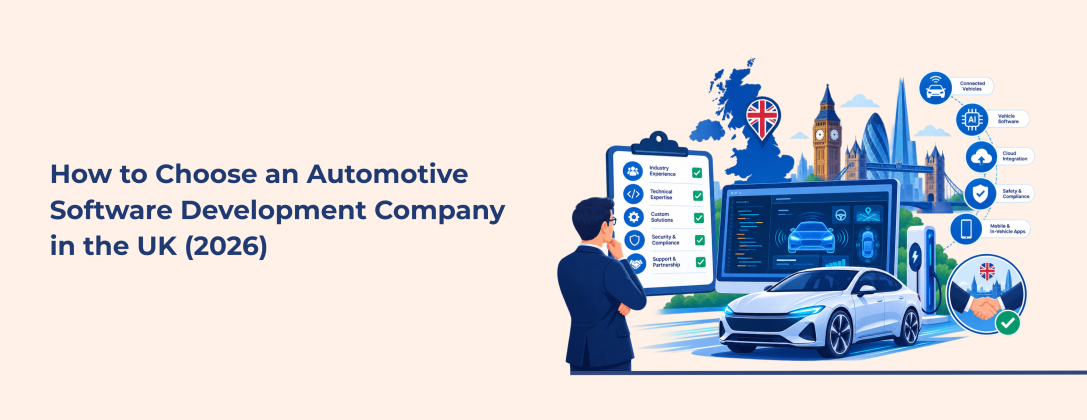
The car of 2026 is no longer just a machine built from steel and rubber - it is a rolling computer, connected to the cloud, guided by sensors, and constantly updated over the air. From electric drivetrains to predictive maintenance, from dealer platforms to fleet telematics, software has become the invisible engine driving the entire automotive value chain. For manufacturers, suppliers, dealerships, and fleet operators across the UK, the question is no longer whether to invest in automotive software - it is who to trust with building it.
Choosing the right partner shapes product quality, compliance, customer experience, and long-term scalability. This guide breaks down what automotive software development actually involves, why the UK market is accelerating, and exactly what to look for before you sign a contract with an automotive software development company.
What Is Automotive Software Development?
Automotive software development is the process of designing, building, testing, and maintaining digital systems that power vehicles, manufacturing operations, and the broader automotive ecosystem. It spans embedded systems inside the vehicle, such as engine control units and infotainment platforms, as well as enterprise-facing systems like dealer management tools, fleet software, and customer relationship platforms.
Unlike generic software projects, automotive software must meet strict safety, reliability, and regulatory requirements. A single software defect in a braking system or battery management unit can have serious consequences, which is why automotive software development demands specialised expertise, rigorous testing methodologies, and deep familiarity with industry standards such as ISO 26262 and Automotive SPICE.
Why the UK Automotive Software Market Is Booming in 2026
The UK automotive sector is undergoing a rapid digital transformation. Several forces are converging to fuel this growth:
- Electrification momentum: With the shift toward electric vehicles accelerating, manufacturers need sophisticated battery management, charging infrastructure, and energy optimisation software.
- Connected and autonomous vehicle investment: The UK government and private investors continue to back research into connected and autonomous vehicles, driving demand for advanced software platforms.
- Post-Brexit supply chain digitisation: UK automotive manufacturers are digitising supply chains to manage new trade complexities and maintain operational resilience.
- Consumer expectations: Buyers now expect app-based vehicle control, real-time diagnostics, and seamless digital dealership experiences.
- Sustainability regulations: Emissions targets and sustainability reporting requirements are pushing companies toward smarter, data-driven operations.
Together, these trends make 2026 a pivotal year for UK automotive businesses to invest in the right technology partner.
Types of Automotive Software Development Solutions for Different Business Functions
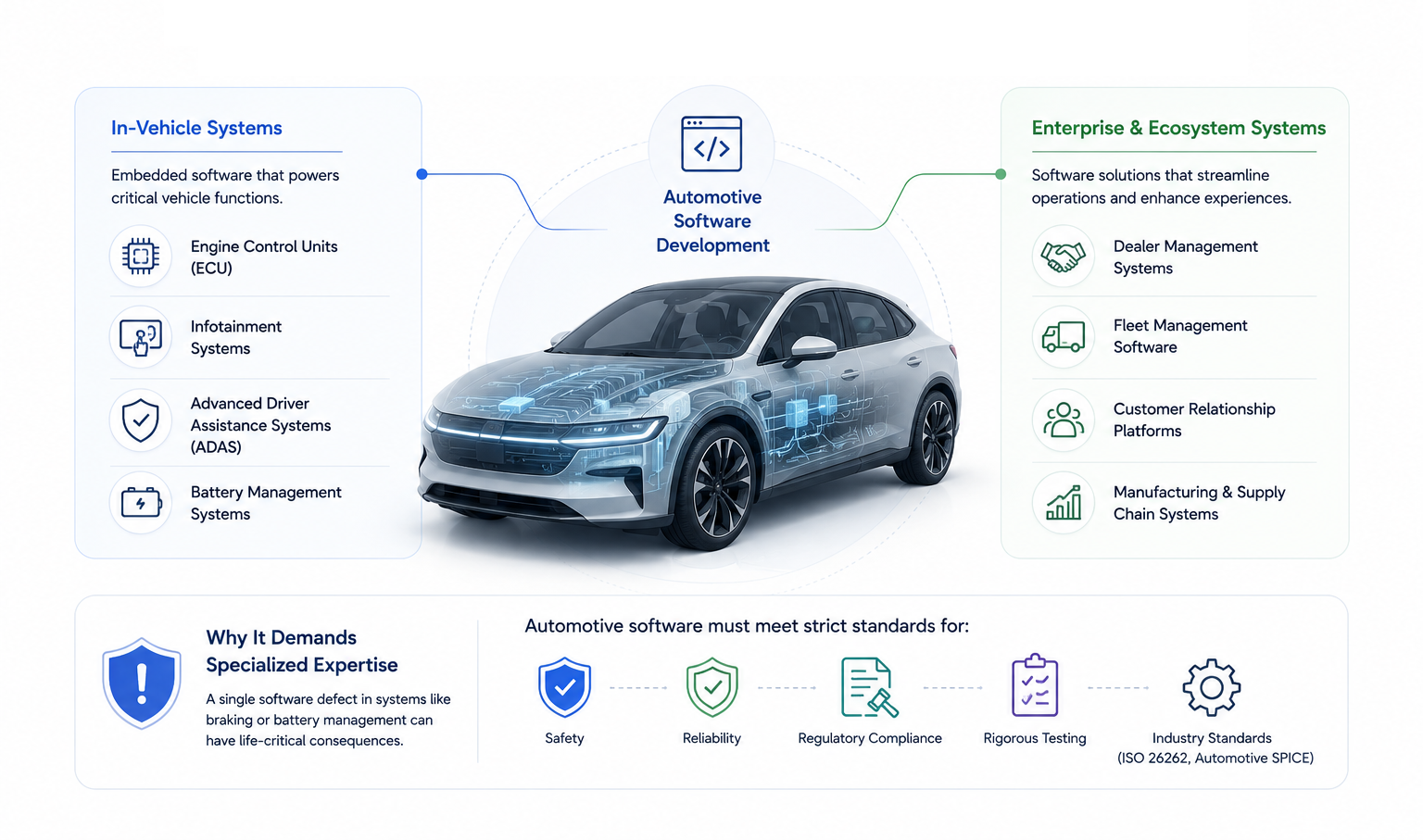
Automotive software is not a single product category. It covers a wide range of automotive software development solutions tailored to different parts of the business, from the factory floor to the driver's smartphone. Understanding these categories helps you scope your project accurately and choose a partner with the right depth of experience.
Manufacturing and Production Management Software
Manufacturing execution systems (MES) and production management software streamline planning, scheduling, and shop-floor operations across assembly lines. These platforms track work in progress in real time, flag quality deviations before they escalate, and coordinate machine, robot, and human workflows. By integrating with IoT sensors on production equipment, manufacturers gain visibility into machine performance, reduce unplanned downtime, and maintain consistent output quality across shifts and plants. Many systems also generate compliance documentation automatically, which simplifies audits and traceability reporting. Pairing these platforms with responsive IT Helpdesk support also ensures that shop-floor technical issues are resolved quickly, minimising costly production interruptions.
Supply Chain and Logistics Software
Automotive supply chains involve thousands of parts moving across multiple tiers of suppliers, often across borders. Supply chain and logistics software provides manufacturers with real-time visibility into inventory levels, shipment status, and supplier performance, while supporting just-in-time and just-in-sequence delivery models that keep production lines moving without incurring excess warehousing costs. Advanced platforms use predictive analytics to flag potential disruptions, such as a delayed shipment or a supplier capacity issue, well before they affect the assembly line.
Dealer Management System (DMS)
A modern DMS unifies sales, inventory, service scheduling, finance, and after-sales operations into a single platform. Instead of juggling disconnected spreadsheets and legacy tools, dealership staff can manage the full customer journey, from initial enquiry to vehicle handover and ongoing servicing, in one place. Well-designed DMS platforms also integrate with manufacturer systems, finance providers, and CRM tools, providing dealership groups with a consistent view of performance across all locations.
Fleet Management Software
Fleet operators rely on software for route optimisation, fuel monitoring, driver behaviour analysis, and predictive maintenance scheduling. These platforms combine GPS tracking, telematics data, and historical usage patterns to reduce fuel consumption, minimise vehicle downtime, and extend asset lifespan. For larger fleets, dashboards can highlight underperforming vehicles or drivers, support compliance with duty-of-care regulations, and forecast maintenance budgets with far greater accuracy than manual tracking.
Connected Vehicle Software
Connected vehicle software includes telematics, over-the-air (OTA) update systems, and vehicle-to-everything (V2X) communication, which keep vehicles connected to infrastructure, other vehicles, and cloud services. This category enables features like remote diagnostics, live traffic and hazard alerts, and software updates that can be pushed to vehicles without a workshop visit. As vehicles become more software-defined, the reliability and security of these connectivity layers become critical to both safety and brand trust.
Electric Vehicle (EV) Management Software
EV-specific platforms handle battery health monitoring, state-of-charge tracking, charging-station integration, range optimisation, and energy-consumption analytics. These systems help manufacturers extend battery lifespan through smarter charge cycles, while giving drivers accurate range predictions based on driving style, terrain, and weather conditions. For charging network operators, EV management software also supports load balancing across stations and integrates with billing and payment systems.
Customer Experience and CRM Solutions
These tools help automotive businesses personalise marketing, manage leads, and build long-term customer loyalty across the entire ownership lifecycle, from first test drive to trade-in. Modern CRM platforms combine purchase history, service records, and digital engagement data to trigger timely, relevant communications, such as service reminders, warranty renewals, or upgrade offers, rather than generic mass marketing.
Vehicle Service and Maintenance Software
Predictive and preventive maintenance platforms use sensor and telematics data to flag issues before they become costly repairs. By analysing patterns in engine performance, battery health, or component wear, these systems can recommend service actions ahead of failure, improving vehicle uptime, safety, and customer satisfaction while reducing warranty claims for manufacturers.
Automotive Mobile Applications
Owner-facing mobile apps now offer remote start, real-time diagnostics, service booking, digital key functionality, and charging status for EVs, extending the brand experience well beyond the dealership. These apps also serve as a direct communication channel between manufacturers or dealers and vehicle owners, supporting everything from recall notifications to loyalty programmes.
Enterprise ERP and Business Management Solutions
ERP systems integrate finance, HR, procurement, and operations, providing automotive businesses with a single source of truth across departments and locations. For manufacturers and large dealer groups, a well-integrated ERP reduces duplicate data entry, improves the accuracy of financial reporting, and supports better decision-making by connecting production data to sales and supply chain performance.
Automotive Analytics and Business Intelligence
Data dashboards and reporting tools turn raw vehicle, production, and business data into actionable insights for leadership teams. Rather than relying on static monthly reports, decision-makers can track KPIs like production yield, dealership performance, or fleet utilisation in real time, spotting trends and issues early enough to act on them.
AI and Automation Solutions
Artificial intelligence powers everything from predictive analytics and automated quality inspection to customer service chatbots and advanced driver assistance features. Computer vision models can detect manufacturing defects faster and more consistently than manual inspection, while machine learning models improve demand forecasting, pricing strategies, and predictive maintenance accuracy. As AI capabilities mature, this is quickly becoming one of the fastest-growing and most competitive areas of automotive innovation.

Build Smarter Automotive Software with TechWize
From custom platforms to connected vehicle solutions, TechWize helps UK automotive businesses turn complex requirements into reliable, scalable software. Let's discuss what your next project needs.
Talk to Our Software Development ExpertsWhy the Right Automotive Software Development Company Matters More Than Ever
With so many interconnected systems at play, a single weak link can disrupt operations, damage customer trust, or trigger compliance failures. The right partner does more than write code - they understand automotive workflows, anticipate regulatory shifts, and build systems that scale as your business grows.
A poorly chosen vendor, on the other hand, can lead to project delays, security vulnerabilities, and software that fails to integrate with existing dealership or manufacturing systems. The right partner will also help you get more value from your existing data through Data Analytics, turning day-to-day operational information into insights that guide better decisions. This is why due diligence before hiring is non-negotiable.
10 Things to Consider Before Hiring an Automotive Software Development Company in the UK
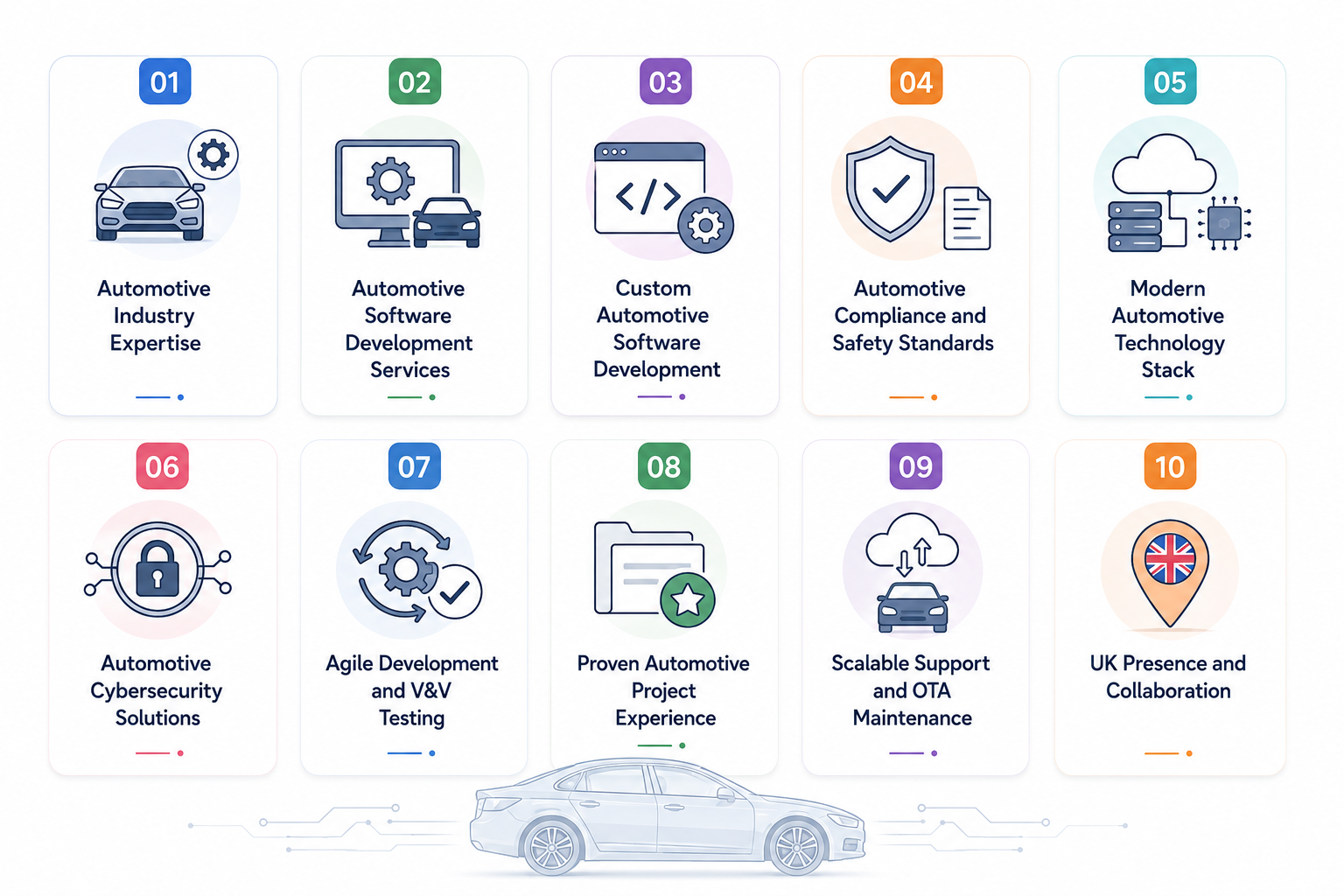
1. Automotive Industry Expertise
Look for a team that has genuine automotive domain knowledge, not just generic software experience. They should understand vehicle systems, dealership operations, and industry terminology from day one.
2. Automotive Software Development Services
Evaluate the breadth of automotive software development services offered - from embedded systems and telematics to enterprise platforms and mobile apps. A partner with a broad range of services can support you as your needs evolve.
3. Custom Automotive Software Development
Off-the-shelf tools rarely fit unique operational needs. Prioritise vendors skilled in custom automotive software development and capable of building solutions precisely tailored to your workflows, fleet size, or dealership network.
4. Automotive Compliance and Safety Standards
Confirm familiarity with ISO 26262, Automotive SPICE, UNECE cybersecurity regulations, and other relevant safety and compliance frameworks that apply to UK and European markets.
5. Modern Automotive Technology Stack
Ask about the technologies used for cloud infrastructure, IoT integration, embedded systems, and AI. A future-ready stack ensures your software remains competitive and maintainable in the long term.
6. Automotive Cybersecurity Solutions
Connected vehicles and dealership systems are prime targets for cyberattacks. Strong automotive cybersecurity solutions, including secure coding practices and regular vulnerability testing, should be a core part of their process. Combining this with Business Intelligence dashboards for real-time threat monitoring can also help teams spot unusual activity before it becomes a serious breach.
7. Agile Development and V&V Testing
An agile approach allows for iterative delivery and faster feedback loops, while rigorous verification and validation (V&V) testing ensures the software performs reliably under real-world conditions.
8. Proven Automotive Project Experience
Request case studies or references from previous automotive projects. A track record of successful delivery within the sector is a strong indicator of capability.
9. Scalable Support and OTA Maintenance
Vehicles and software both need updates long after launch. Confirm the vendor offers scalable post-launch support, including over-the-air update capabilities and ongoing maintenance plans.
10. UK Presence and Collaboration
Working with a company that has a UK presence, or at least UK-aligned working hours and regulatory awareness, makes collaboration smoother and ensures faster response times during critical issues.
TechWize: Drive Innovation with Automotive Software Development Services
TechWize brings together deep automotive domain knowledge and modern engineering practices to help UK businesses build software that performs as reliably as the vehicles it supports. From dealer management systems and fleet software to EV management platforms and AI-powered analytics, TechWize designs solutions around real automotive workflows rather than generic templates.
With a strong focus on compliance, cybersecurity, and scalable architecture, TechWize supports automotive businesses at every stage - from initial strategy and custom development through to long-term maintenance and OTA support. Whether you are a manufacturer modernising production systems or a dealership network upgrading customer experience platforms, TechWize's automotive software development services are built to keep pace with an industry that never stands still.
Read Similar Blog
How to Choose the Right ERP System for Automotive Businesses in the UK
Explore More Automative Software Insights ⬩➤Conclusion: Ready to Build the Future of Automotive Software?
The automotive industry in 2026 runs on software as much as it runs on engineering. Choosing the right automotive software development company UK businesses can rely on requires more than comparing price quotes - it means evaluating domain expertise, compliance readiness, technical capability, and long-term support commitment.
Whether you need custom automotive software development, automotive software testing, QA and validation services, a connected vehicle solution, or enterprise-wide digital transformation, the right technology provider will help you accelerate delivery, ensure software quality, stay compliant, and provide the seamless experiences today's drivers and dealers expect.
If you are ready to take the next step, TechWize is here to help you build automotive software solutions designed for what comes next.