501, Fifth Avenue, Suite 805 New York, NY 10017
 info@techwize.com
 +1 (949) 887-0154
 TechWize

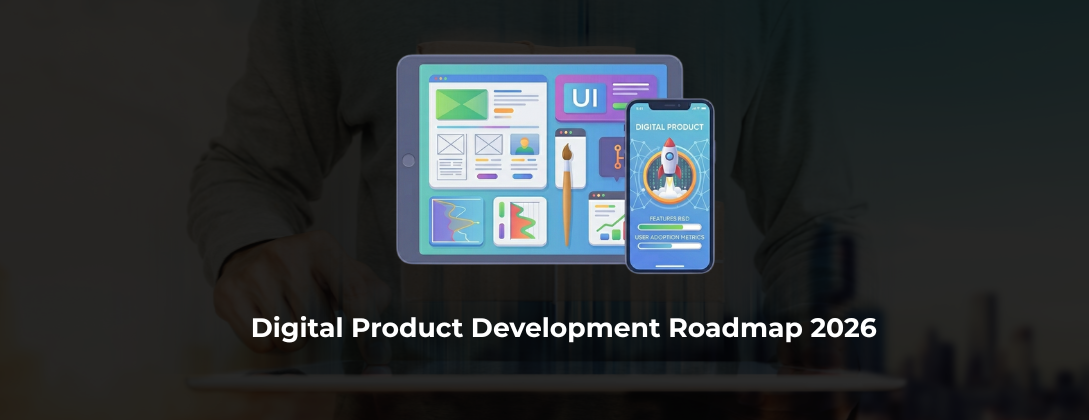
In today’s world, it feels like there is an app or a digital platform for almost everything. From ordering groceries to managing our finances, digital products have become the backbone of modern life. But have you ever wondered how these products actually come to life? It isn’t magic, and it certainly doesn’t happen overnight.
Digital product development is a complex yet fascinating journey. It is the art and science of turning a simple thought or a sketch on a napkin into a fully functioning software product that people love to use. Whether you are a startup founder with a disruptive idea or an enterprise looking to digitize your operations, understanding this process is crucial.
In this guide, we will walk through the entire lifecycle of digital product development, breaking down the technologies, stages, challenges, and best practices that lead to success. Let’s begin by exploring what digital product development means and why it matters.
Overview of Digital Product Development
At its core, Digital Product Development is the complete process of creating a software product. This includes everything from the initial "lightbulb moment" to the final launch and ongoing maintenance. Unlike physical products like a car or a toaster, digital products are intangible. You can’t hold them in your hand, but you interact with them through screens.
However, just because you can’t touch them doesn’t mean they are easy to build. A successful digital product must solve a real problem, be easy to use, and function reliably. It requires a blend of creativity, technical expertise, and strategic planning. It’s not just about writing code; it’s about building a solution that fits into the lives of your users.
Key Technologies in Digital Product Development
Before we dive into the process, it helps to understand the tools of the trade. Technology evolves rapidly, and choosing the right stack (combination of technologies) can make or break a product.
Frontend Technologies: This is what the user interacts with—the product's "skin." Popular choices include React, Angular, and Vue.js. These frameworks help developers create responsive and interactive interfaces across devices.
Backend Technologies: This is the "brain" of the product. It runs on the server, handles data, and ensures the frontend has what it needs. Common backend languages include Python, Node.js, Java, and .NET.
Cloud Computing: In the past, companies had to buy and maintain massive physical servers. Today, we use the cloud. Platforms like AWS (Amazon Web Services), Microsoft Azure, and Google Cloud allow products to scale instantly. If your app goes viral, the cloud can handle the traffic spike without crashing.
Artificial Intelligence (AI) and Machine Learning: AI is no longer sci-fi; it is a standard part of modern products. It powers recommendation engines (like on Netflix), chatbots for customer service, and predictive analytics that help businesses make smarter decisions.
Database Management: Every digital product needs a place to store its information. Technologies like SQL (PostgreSQL, MySQL) and NoSQL (MongoDB) databases act as the filing cabinets, keeping user data safe and organized.
Top 6 Stages of the Digital Product Development Roadmap
Building a digital product without a roadmap is like trying to build a house without blueprints. You might end up with a structure, but the kitchen might be in the bathroom. Here is the standard 6-stage roadmap that guides successful products from concept to reality.
Stage 1: Ideation and Market Research
Everything starts with an idea. But having an idea isn’t enough. You might think you have the next Facebook, but does the world actually need it? This stage is about validation.
First, you define the problem you are trying to solve. Are you saving people time? Are you saving them money? Next, you research the market. Who are your competitors? What are they doing well, and where are they failing? If your concept involves Mobile App Development, this is the critical phase where you determine if the market actually needs another app on their home screen.
This stage involves a lot of questioning. You talk to potential users, run surveys, and analyze data. The goal is to answer one question: Is there a market for this product? If the answer is yes, you move forward. If the answer is no, you pivot or scrap the idea, saving yourself months of wasted effort.
Stage 2: Planning and Requirement Analysis
Once you have a validated idea, you need a plan. This is where the "what" and the "how" are defined. You create a Product Requirements Document (PRD). Think of this as the instruction manual for the developers.
In this stage, you list every single feature the product needs. You prioritize them into "must-haves" and "nice-to-haves." This helps the team focus on building the core value first, rather than getting distracted by fancy features that don’t add immediate value. You also set the timeline and budget here. It is the bridge between the business vision and the technical execution.
Stage 3: UI/UX Design
This is where the product starts to take shape visually. UI stands for User Interface, and UX stands for User Experience. While they are often grouped, they serve different purposes.
UX Design is about logic and flow. It involves creating wireframes, basic sketches of the app to map out how a user moves from screen to screen. If a user clicks a "Buy" button, what happens next? Good UX makes the product intuitive, so users don't have to think hard about how to use it.
UI Design is about aesthetics. It involves choosing the colors, fonts, icons, and spacing. The goal is to make the product look professional and trustworthy. A great design can make a mediocre product feel premium, while a bad design can make a great product feel broken.
Stage 4: Development and Engineering
This is the longest phase, often called the "construction" phase. Developers take the designs and the requirements documents and start writing the code.
Usually, the team is split into frontend and backend developers. They work together to build the product in "sprints," short, usually two-week cycles where specific chunks of work are completed. This allows for regular check-ins and adjustments. If the project involves Mobile App Development, specialized engineers will focus specifically on the unique requirements of iOS and Android platforms during this time.
During this stage, the product goes from being a lifeless design to a functioning piece of software. It’s a noisy, active phase where code is written, reviewed, and integrated.
Stage 5: Software Testing and Quality Assurance
You wouldn't drive a car off the lot without testing the brakes, and you shouldn't release software without testing it. Quality Assurance (QA) is the safety net.
Testers try to break the product. They look for bugs, glitches, and security vulnerabilities. They test on different devices (iPhones, Androids, tablets, laptops) and different network speeds. This specific discipline, often referred to as Software Testing, is distinct from development because it focuses entirely on risk management and user stability.
There are different types of testing:
-
Functional Testing: Does the feature work as intended?
-
Performance Testing: Does the app crash if 1,000 people use it at once?
-
Security Testing: Can hackers steal user data?
Fixing bugs at this stage is cheaper than fixing them after the product has launched.
Stage 6: Deployment and Continuous Improvement
Finally, the product is ready to go live. Deployment means pushing the code to the production servers where users can access it. This is often a moment of celebration, but it is not the finish line.
Once real users start using the product, you will receive feedback. They will find bugs your testers missed. They will suggest features you never thought of. This leads to Continuous Improvement. Modern products are never "finished." They are constantly updated with new features, security patches, and improvements based on user feedback. This cycle of launch, measure, learn, and improve is what keeps a product relevant for years.
Best Practices for Successful Product Development
Building a product is tough. To increase your chances of success, successful teams follow a few golden rules:
Start Small (MVP): Don’t try to build the "perfect" product right away. Build a Minimum Viable Product (MVP). This is the simplest version of your product that still solves the core problem, with room to later add advanced features such as an AI video maker.
User-Centric Mindset: Always design for the user, not for yourself. Your personal preferences don't matter if they don't match what your users need.
Agile Methodology: Be flexible. Don't stick to a rigid plan if the market changes. Agile development allows teams to pivot quickly when new information arises.
Clear Communication: Miscommunication kills projects. Developers, designers, and business stakeholders must speak a common language. Regular meetings and clear documentation are vital.
Common Challenges in Digital Product Development
It is important to be realistic. The road to launching a digital product is paved with obstacles.
Scope Creep: This is the silent killer of projects. It happens when a client keeps adding "just one more small feature." Eventually, the project becomes bloated, the deadline is missed, and the budget explodes.
Unclear Goals: If the team doesn't know exactly what they are building, they will build the wrong thing.
Tech Stack Mismatch: Choosing a technology that is too old or too new can cause problems. You need a stack that is stable and supported.
Budget Constraints: Good software costs money. Underestimating the cost of design, development, and marketing can leave a product stranded halfway through development.
Key Benefits of Effective Digital Product Development
Despite the challenges, why do businesses invest so much in this process? Because the rewards are immense.
Competitive Advantage: A well-built digital product can set you apart from competitors who are still using outdated methods.
Scalability: Digital products can grow without the physical limitations of brick-and-mortar businesses. You can go from 100 users to 1 million users without needing to build new factories.
Data-Driven Insights: Unlike physical products, digital products generate data. You can see exactly how users behave, which helps you make smarter business decisions.
Customer Loyalty: A product that solves a problem effectively creates loyal customers who return again and again.
Real-World Application of the Roadmap
Let’s imagine a startup called "FitTrack." They want to build an app that helps people create custom workout plans.
Stage 1: They interview gym-goers and realize people are confused by complicated machines. They decide to build a simple app with video tutorials.
Stage 2: They plan an MVP. The only feature for version 1.0 is a library of workouts. They skip the "social sharing" feature for now to save money.
Stage 3: Designers create a dark-mode interface because users often work out in the morning or evening and want to reduce eye strain.
Stage 4: Developers build the app for iOS first, using Swift, because their research showed 70% of their target audience uses iPhones.
Stage 5: Testers find that the videos buffer on slow Wi-Fi. The team optimizes the video compression to fix this.
Stage 6: The app launches. Users love the dark mode but ask for a calorie counter. The team adds "Calorie Counter" to the roadmap for version 1.1.
By following the roadmap, FitTrack didn't waste money building features nobody wanted. They launched a solid product and iterated.
Measuring Product Development Success
How do you know if your product is actually successful? You need to track Key Performance Indicators (KPIs).
Daily Active Users (DAU): How many people are actually logging in every day? This shows if your product has become a habit.
Retention Rate: Do users come back after the first day? If 1,000 people download your app but only 10 open it again, you have a problem.
Customer Acquisition Cost (CAC): How much money do you spend on marketing to get one new user?
Customer Lifetime Value (CLV): How much money does a user spend with you over the time they use your product?
If your CLV is higher than your CAC, and your retention is high, your product development is a success.
Partnering with TechWize for End-to-End Digital Product Development
The process described above is exciting, but it requires a team of experts. You need designers, backend developers, frontend developers, QA analysts, and project managers. Building this team in-house is expensive and time-consuming.
This is where TechWize comes in. TechWize specializes in end-to-end digital product development. We don't just write code; we become your technology partner. Whether you are in the Ideation stage and need help with market research or you have a finished design and need a team to engineer it, we have the expertise to bridge the gap.
We understand the challenges of scope creep and budget management. Our agile teams ensure that your product is built using the latest technologies, designed for the user, and tested for quality. With TechWize, you get the benefit of a full-scale development team without the headache of hiring and managing one yourself. We turn your vision into a digital reality.
Conclusion: Future-Proofing Your Digital Product Strategy
The digital landscape changes fast. What is innovative today might be obsolete tomorrow. However, the fundamental principles of digital product development remain constant: solve a real problem, design for the user, and build with quality.
By following the 6-stage roadmap from ideation to continuous improvement, you minimize risk and maximize your chances of building something meaningful. Remember, launching the product is just the beginning. The most successful digital products are those that evolve with their users.
Don’t view digital product development as a one-time project. View it as a long-term strategy. Stay curious, stay flexible, and never stop improving. If you have an idea, the time to start developing it is now. The world is waiting for your solution.